

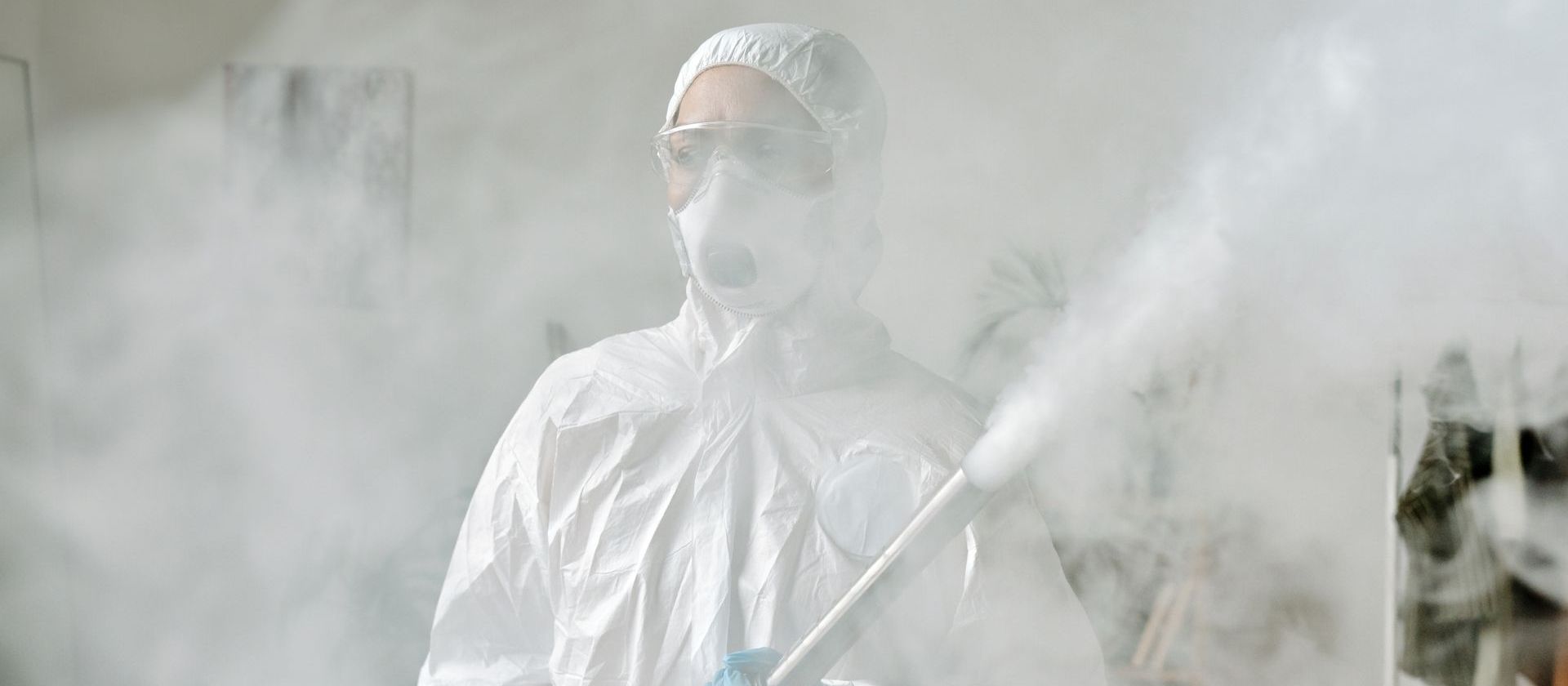

Professional disinfectant fogging uses a ULV (ultra-low volume) fogger to spread a fine mist of disinfectant over the surfaces in a room, reducing the number of germs on the surfaces it reaches. It is a useful extra after illness, before reopening or in busy shared spaces, but it supplements cleaning rather than replacing it, and no honest company can promise a building that is 100% virus free.
Key takeaways
- We disinfect homes, offices, schools, creches, doctors' rooms and other workplaces across Cape Town.
- A ULV or micron fogger turns disinfectant into tiny droplets that settle on exposed surfaces, including hard-to-reach ones.
- Fogging lowers the microbial load on surfaces it contacts. It does not sterilise a building and does not protect against germs brought in afterwards.
- Surfaces should be cleaned first, because dirt and grease shield germs from disinfectant.
- Fogging makes most sense after illness, during an outbreak, before reopening a space and in high-traffic areas.
How ULV fogging works
A ULV fogger, sometimes called a micron fogger or cold fogger, breaks a liquid disinfectant into very small droplets measured in microns. Those droplets hang in the air briefly and then settle on surfaces throughout the room: desks, door handles, chair backs, shelving, light switches and the tops of cupboards that a cloth seldom reaches. Because the mist spreads out, it can cover a large area evenly in a short time, which is why it suits classrooms, open-plan offices and waiting rooms.
The disinfectant itself does the work. The fogger is simply a way to get a thin, even coat of it onto many surfaces at once. The product we use depends on the site and the reason for the treatment, and it is applied according to the manufacturer's directions for dilution and contact time.
What fogging can and cannot do
Older marketing in this industry, including our own early articles, said things like leaving a building "free of all viruses". That is not accurate, and we no longer say it. Here is the honest picture.
What it can do
- Reduce the number of bacteria and viruses on surfaces the disinfectant reaches and stays on for long enough.
- Treat a whole room quickly, including awkward areas that are easy to miss when wiping by hand.
- Give staff, parents or patients reasonable confidence that a space has been properly treated after someone was ill.
What it cannot do
- It cannot sterilise a building or guarantee that every germ is gone.
- It cannot clean. Dust, grease, food residue and body fluids protect microbes and must be removed first.
- It does not keep working once people come back in. The next person with a cold who touches a door handle recontaminates it.
- It does not reach inside closed drawers, under heavy objects or into soft furnishings in depth.
- It is not a medical treatment and does not replace hand washing, ventilation or staying home when sick.
Our view: fogging is a good tool used in the right place. Selling it as a magic shield does the whole service a disservice.
When disinfectant fogging is worth it
- After illness. When someone in a household or office has had a contagious illness, such as a bad stomach bug or a respiratory infection, fogging after a thorough clean helps reduce what is left on surfaces.
- During an outbreak. Schools and creches dealing with a run of tummy bugs or flu often use fogging alongside stricter cleaning.
- Before reopening. After renovations, a long closure or a change of tenant, fogging is a sensible final step before people return.
- High-traffic spaces. Reception areas, waiting rooms, gyms, staff kitchens and shared bathrooms see many hands a day and can benefit from periodic treatment.
- After pest problems. Areas contaminated by rodent droppings or cockroach activity can be cleaned and then disinfected once the pests are dealt with.
How to prepare for a fogging treatment
- Clean first. Wipe down surfaces and remove visible dirt, spills and food. If there has been illness, clean any contaminated areas carefully beforehand.
- Clear people and pets. Everyone, including pets, must leave the area. Remove birds and cover or remove fish tanks.
- Put away food and personal items. Store food, dishes, toothbrushes and cosmetics in closed cupboards or take them out of the room.
- Protect sensitive items. Cover or switch off sensitive electronics if the technician advises it, and tell us about artworks, documents or delicate fabrics.
- Open internal doors and drawers you want treated. The mist only reaches what is exposed.
- Switch off smoke detectors and air conditioning if asked, as some systems react to fog or spread it where it is not wanted.
Re-entry time
You cannot walk back in straight away. The disinfectant needs time to stay in contact with surfaces and then for the mist to settle and the room to air. Re-entry time depends on the product, the size of the space and the ventilation, and the technician will give you a specific time on the day. As a rule, open windows and doors when you return, and wipe down food preparation surfaces and children's toys with clean water before use if advised.
Homes, schools, creches and doctors' rooms
Each setting has its own concerns. In a home it is usually about recovery after illness. In a creche or school it is about young children who put hands and toys in their mouths, which is why product choice and airing time matter. In doctors' rooms and practices, fogging supports the existing infection control routine and does not replace it. For workplaces, we can schedule treatments after hours or on weekends so there is no disruption.
Booking a treatment
Tell us the type of site, the size and the reason you want it done, and we will give you a free quote and explain how the day will run. You will receive a report afterwards listing the products used. Learn more about disinfectant fogging treatment in Cape Town, our viral disinfection after illness, or bacteria control for ongoing hygiene in food and care settings.
Frequently asked questions
Does disinfectant fogging kill all viruses?
No. Fogging reduces the number of germs on surfaces the disinfectant reaches, but it cannot guarantee a space is completely free of viruses or protect against germs brought in afterwards.
Do I still need to clean before fogging?
Yes. Dirt and grease shield germs from disinfectant, so surfaces should be cleaned first. Fogging supplements cleaning and does not replace it.
How long before we can go back inside?
It depends on the product, room size and ventilation. The technician will give you a specific re-entry time on the day, and you should air the space when you return.
Is fogging suitable for creches and schools?
It can be, with the right product, proper preparation and enough airing time before children return. Many schools use it after an outbreak or before reopening.