


What we deal with
Fogging is a method rather than a single type of job, and we use it in a few typical situations. Offices, call centres and gyms book it as a periodic hygiene treatment, often over a weekend. Schools, creches and churches fog halls and classrooms during holidays. Vehicle fleets, taxis and shuttle buses are fogged between shifts because the cabins are full of small surfaces. Storerooms, cold rooms and food factories use it as part of a wider hygiene plan, and homes book it after renovations or before a new baby arrives.
Signs to look for
Tick every sign you have noticed. It takes ten seconds.
Why it matters: Shared surfaces like door handles, desks, gym equipment and vehicle controls pick up germs from every hand that touches them. In busy workplaces and schools, that is how illness moves from person to person. Fogging without cleaning first is a common mistake, because disinfectant does not work well on surfaces covered in grime. Poorly done fogging with the wrong product or no re-entry time can also leave residues or irritate people who come back in too soon.
How we treat it
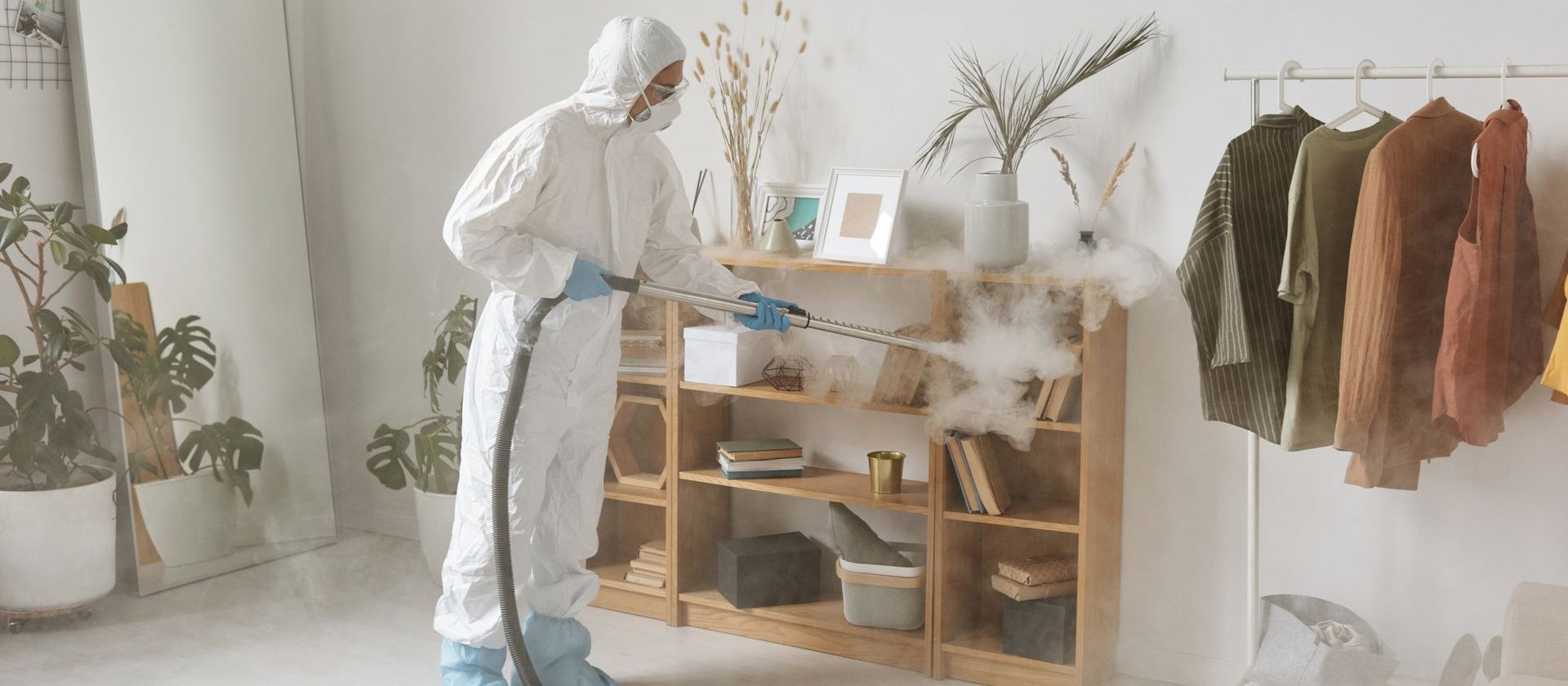
We use ULV foggers that produce a fine, controlled mist rather than drenching the room, so the disinfectant settles on surfaces without soaking them. Visible dirt should be cleaned off first, as fogging is meant to work alongside cleaning, not replace it. We choose a disinfectant suited to the space, with food-area products for kitchens and storerooms. Electronics are covered or switched off as needed, smoke detectors are taken into account, and the area is closed off during treatment. We then advise on the re-entry time and ventilation before people return.
- Site check
We look at the space, what it is used for and any sensitive equipment, food or electronics.
- Preparation
Surfaces are cleaned of visible dirt, food is put away and sensitive items are covered or moved.
- Clear the area
People, pets and plants leave the room, and doors and vents are managed for the treatment.
- Fogging
The technician fogs the space with a ULV unit, working systematically so every area is reached.
- Re-entry and ventilation
We tell you how long to wait, then the space is aired before it is used again.
Things most people don't know
Fogging works best on clean surfaces. If grime is left on a desk, the disinfectant has to fight through it first, which is why we always ask for a clean before we fog.
People often confuse disinfectant fogging with insect bombs. They are completely different products for different jobs, and an insect fogger will do nothing for germs.
Before switching on a fogger, a technician checks the smoke detectors, the air conditioning and any open vents. Getting that wrong can set off alarms or send the mist into the wrong room.
When it peaks in Cape Town
Workplaces and schools often book fogging before the Cape winter, when people spend more time indoors with windows closed and colds and flu go around. School holidays and the December shutdown are popular times because buildings are empty. Fogging itself works in any season.
DIY or call a professional?
Hardware store fogging cans exist, but most are insecticide bombs rather than disinfectant foggers, and they are not the same thing at all. For a single room, a careful clean with a good disinfectant does most of what you need. For offices, schools or fleets, professional ULV fogging is faster and more even, and we think it is worth it there.
What affects the price
The cost of fogging depends mainly on the size and volume of the space and how many rooms or vehicles are involved. Preparation needs, such as covering equipment or working around food areas, also affect the time on site. Regular fogging for businesses can be priced as a scheduled service rather than once-off visits.
Preventing it coming back
- Keep up regular cleaning of high-touch surfaces between fogging treatments, as fogging does not replace day-to-day hygiene.
- Schedule fogging for weekends, holidays or after-hours so the space has time to air before people return.
- Clear desks and counters before treatment so the mist can reach the surfaces.
- Tell us about fish tanks, birds or sensitive equipment in advance so we can plan around them.
- Ventilate well after the re-entry time has passed.
- Use fogging alongside pest control in food areas, not as a substitute for it.
Frequently asked questions
How long before we can go back into the room?
It depends on the product and the space, but usually a few hours. We will give you a specific re-entry time and ventilation advice on the day.
Will fogging damage electronics?
ULV fogging produces a fine mist rather than wet spray, but we still cover or switch off sensitive equipment as a precaution.
Does fogging replace cleaning?
No. Surfaces should be cleaned of visible dirt first, then fogging disinfects them, including the hard-to-reach spots.
Is it the same as fumigation?
No. Fumigation targets insects with a gas, while disinfectant fogging targets germs and bacteria on surfaces with a disinfectant mist.
Can you fog vehicles?
Yes, cars, minibuses and fleet vehicles are fogged with the cabin closed, then aired before use.
Can you do it after hours?
Yes, after-hours and weekend visits are available on request, which is how most businesses book it.
Do I need bacteria control after a rodent infestation?
If rodents were nesting in your pantry, roof or storeroom, yes, it is worth disinfecting once they are gone. Droppings and urine can carry disease even after the rodents are dead.
Can you clean pigeon droppings from a roof space?
Yes. We remove droppings and nesting material and disinfect the area, and we can also proof the roof so the pigeons do not return.
Does fogging kill the COVID-19 virus?
The disinfectants we use are effective against enveloped viruses on surfaces when they are given the right contact time. Fogging treats surfaces in the room; it does not make the air or the people in it immune.
Do we have to close the whole building?
Not always. We can treat the affected section first and work around the rest, or come in after hours.
Disinfectant Fogging Treatment by area
We cover all of these suburbs from our base in Brackenfell. Pick yours for local advice.
